
By: M.Baaka | May 2026 Digital Edition
Let’s be entirely honest about the old-school independent music grind: it was incredibly heavy, wildly inefficient, and deeply depressing.
The traditional checklist went exactly like this: Write the song. Scour the internet to find a decent beat. Save up money to book two hours at a local studio. Record the track over a shaky engineering job. Wait three weeks to get the mix back. Wait another two weeks for the master. Scramble to find some generic cover art on Instagram. Figure out your digital distribution portal. Design a quick flyer on your phone. Post it once on your personal feed with twenty hashtags. Pray that people actually care.
That ancient model is completely dead in the current musical climate. But trying to move fast without a definitive structure creates an entirely different, equally toxic problem. Artists end up dropping music constantly, but the records feel completely unsupported. Songs are released into the ether and vanish within forty-eight hours. Infinite short-form content gets made, but the core artistic message remains completely unclear. Slick visuals drop, but nobody actually knows the story behind the human being in the frame.
The new workflow cannot just be about moving faster. It has to be about moving significantly smarter. And it has to start long before the song is even finished.
If you are only thinking about how to promote a record after the final master file hits your inbox, you are already three weeks behind the curve. The rollout doesn’t start at release; it starts at inception.
A song gains massive structural value the exact second an artist deeply understands its specific cultural role. Not every single track you record is meant to be a mainstream radio smash, and treating every release with the exact same strategy is a fast track to burnout.
Some songs are strictly designed to introduce your name to a new audience. Some tracks exist purely to prove your lyrical or technical skill to the old-heads. Some songs are deep-cuts meant to speak exclusively to your core, day-one supporters. Some records are high-energy performance tracks built for the stage, while others are vibe-heavy playlist cuts meant for late-night driving. Not every release has the same job.
The new workflow demands that you interrogate your music while it’s still sitting in your DAW workspace. Not in some fake, corny marketing way, but in a totally practical way. You need to ask yourself the real questions:
-
What is this song actually about?
-
Who is it genuinely for?
-
What visual world does this audio belong to?
-
What specific underground scene or city might understand this frequency first?
-
Is this a radio record, a performance record, a playlist record, a video record, or a deep-cut fan record?
-
What raw behind-the-scenes content can be captured right now during the actual creation process?
Executing this vision requires a level of organization that most artsy creators absolutely hate. But speed always favors the prepared.
If you call yourself a professional independent artist in 2026, you should have a master release folder living in the cloud that is fully stocked and locked before you even think about setting a release date. We are talking about a definitive digital archive that includes your final high-res WAV, a lightweight MP3 for quick email sharing, a clean radio version if available, the cleared instrumental, the raw acapella track if needed, the final high-res cover artwork, updated press photos, a punchy short bio, an honest song description, full production credits, your producer info, your ISRC metadata tracking codes, pre-written social media captions, optimized short video clips, and your target playlist or blog submission links.
This sounds incredibly basic, but a staggering ninety percent of independent artists do not have this folder ready when an opportunity knocks. That technical delay will cost you your slot every single time. When a prominent music blog, a regional club DJ, a massive playlist curator, or a digital radio platform like DBTV Network asks you for your promotional materials, you should not be frantically scrambling on your phone in the middle of your day job.
This is exactly where modern automation tools should step in to save your life. You can aggressively use technology to transcribe your audio interviews into written text, organize your sprawling lyric drafts, plan your long-term content, schedule your social media posts across time zones, format your press one-sheets, instantly resize video clips for mobile screens, and manage your master release calendar.
But again, the tool is not the vision.
Technology is a magnificent administrative servant, but it makes for a terrible creative master. The strongest workflow is still built entirely around taste. Knowing what to release, when to release it, how to frame it, and when to hold back is the actual artistry.
Independent does not mean random. A smart independent creator operates exactly like a lean, agile, small record label. That means you are meticulously planning your moves, documenting the process, communicating transparently with your team, and ruthlessly following up on every lead.
Once the record officially drops, the real work actually begins. You can’t just look at the streaming numbers on day one, throw a tantrum if they aren’t millions, and quit. You have to watch the behavior of the record over the first three days, the first week, the second week, and the full month.
Analyze the data like a scientist: Did the song completely die after the initial announcement post? Did it start growing slowly via word-of-mouth? Did a specific random city halfway across the country suddenly start responding to the hook? Did one specific behind-the-scenes video clip vastly outperform the others? Are real human beings in the comments quoting a specific bar from your second verse?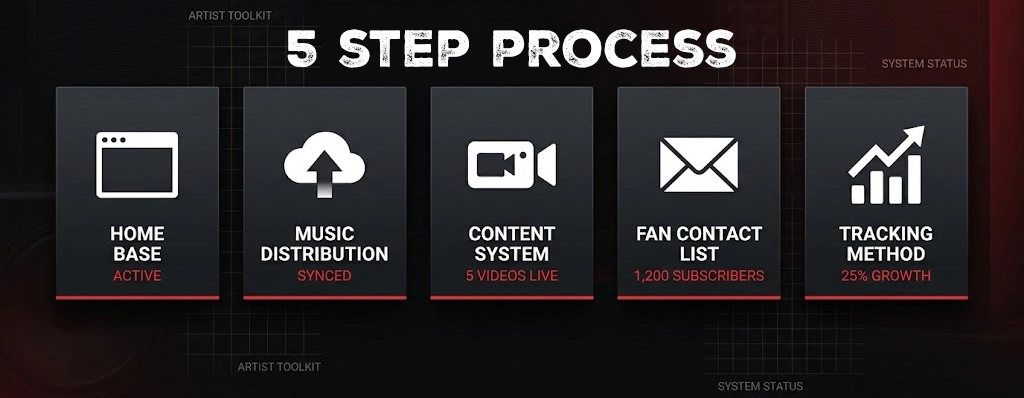
That raw information should completely dictate your very next creative move. The new workflow isn’t just about creating music at a faster velocity—it’s about learning at a faster velocity.
The independent artists who are winning the chess game right now are not the ones with the massive major-label budgets. Sometimes they are simply the ones who are paying close attention to the small details, adjusting their trajectory instantly based on real data, and keeping their core human identity entirely intact while the entire digital system changes around them.
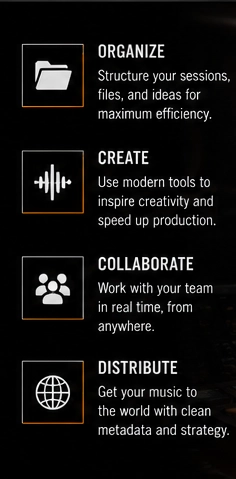
The blueprint is simple: Create. Organize. Release. Measure. Adjust. Repeat. Just make sure you never let the noise of the process become louder than the magic of the music itself.
 Los Angeles | Redlands | Phoenix | Memphis | NYC
Follow us: @GemworkTV | Contact: info@gemwork.tv
Los Angeles | Redlands | Phoenix | Memphis | NYC
Follow us: @GemworkTV | Contact: info@gemwork.tv