
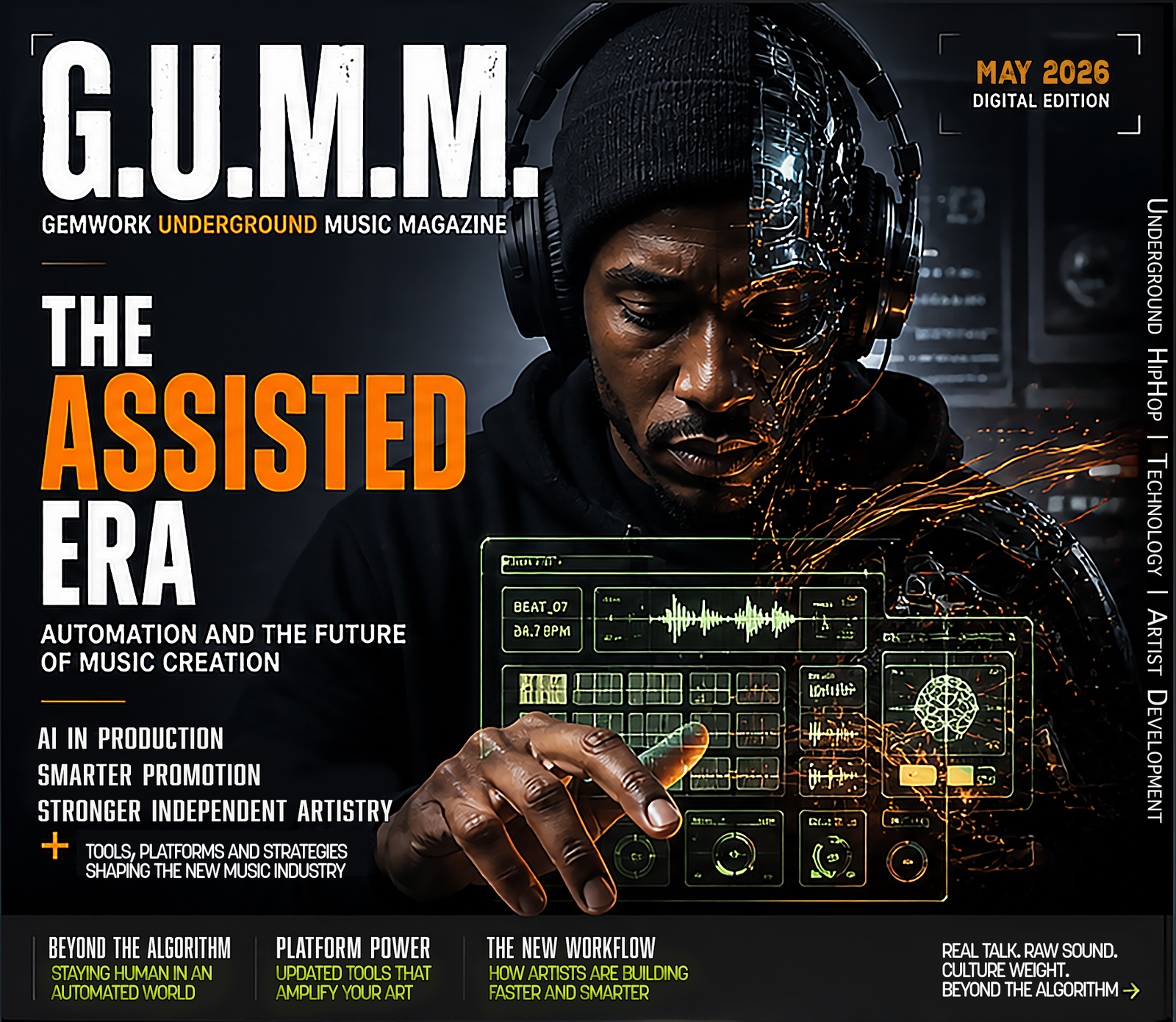
Let’s keep it a stack: the worst thing to ever happen to aspiring musicians is the “Studio Tour” vlog format. You watch some multi-platinum producer sit in a million-dollar room in Atlanta, surrounded by vintage analog gear they don’t even know how to patch correctly, clicking a mouse three times, and suddenly a hit record appears. It makes the act of creating music look like an elite secret society where you need a trust fund just to get past the front door.
Welcome to The Assisted Era. And if you’re still standing on the sidelines using “I don’t have the right equipment” as an excuse, your time is officially up.
The music industry hasn’t entered an artificial phase; it has entered an accessible one. The wall between being a casual fan who nods their head on the subway and being the person who actually created the beat pounding in those headphones has completely crumbled. The tools inside a basic, entry-level Digital Audio Workstation (DAW) today have more processing power than the entire studio space Abbey Road had when the Beatles were tracking records.
The barrier to entry isn’t money anymore. It’s your willingness to look stupid for the first two weeks while you figure out what a buffer rate is.
M.BAAKA’S NOTES “An MPC didn’t make J Dilla great. Dilla made the MPC legendary because he stopped staring at the box and started sampling his dad’s record collection.”
Every legendary era in hip-hop started because someone stopped waiting for permission and just used what was lying around the house. When Grandmaster Flash was inventing the scratch, he wasn’t using audiophile-grade gear; he was patching together broken turntables with literal bobby pins and glue. When the golden era of boom-bap took over, kids weren’t booking high-end orchestral halls—they were sitting in cramped apartments sampling three-second drum breaks off dirty vinyl records into machines that had less memory than a modern car key fob.
The genius of the culture has never been about having the most expensive setup. It’s about taking whatever tool is within arm’s reach and forcing it to speak with your specific accent.
Right now, that tool is sitting on your laptop or even your phone. Transitioning from a casual listener to a full-on producer doesn’t require a major label budget; it requires you to change how you listen to music. When you hear a track you love, stop just vibing to it. Dissect it. Where is the snare hitting? Why does the bass roll off right before the hook? How did they space out the vocals to make the room feel so wide?
Once you start asking those questions, you’re no longer a consumer. You’re an engineer in training. The modern software assistants aren’t there to make the music for you—if you let a machine write your melodies, you’re just automating your own boringness. The tools are there to handle the tedious, technical headaches so that your brain can stay focused on the actual feeling of the track.
The machine can assist the process, but the culture still needs your pulse. The shortcuts are everywhere now, which means the bedroom creators who actually have a unique story, a bit of discipline, and the nerve to press record are the ones who are going to shift the landscape next.
Stop standing on the side of the stage. The door is unlocked. Walk in.

 Los Angeles | Redlands | Phoenix | Memphis | NYC
Follow us: @GemworkTV | Contact: info@gemwork.tv
Los Angeles | Redlands | Phoenix | Memphis | NYC
Follow us: @GemworkTV | Contact: info@gemwork.tv