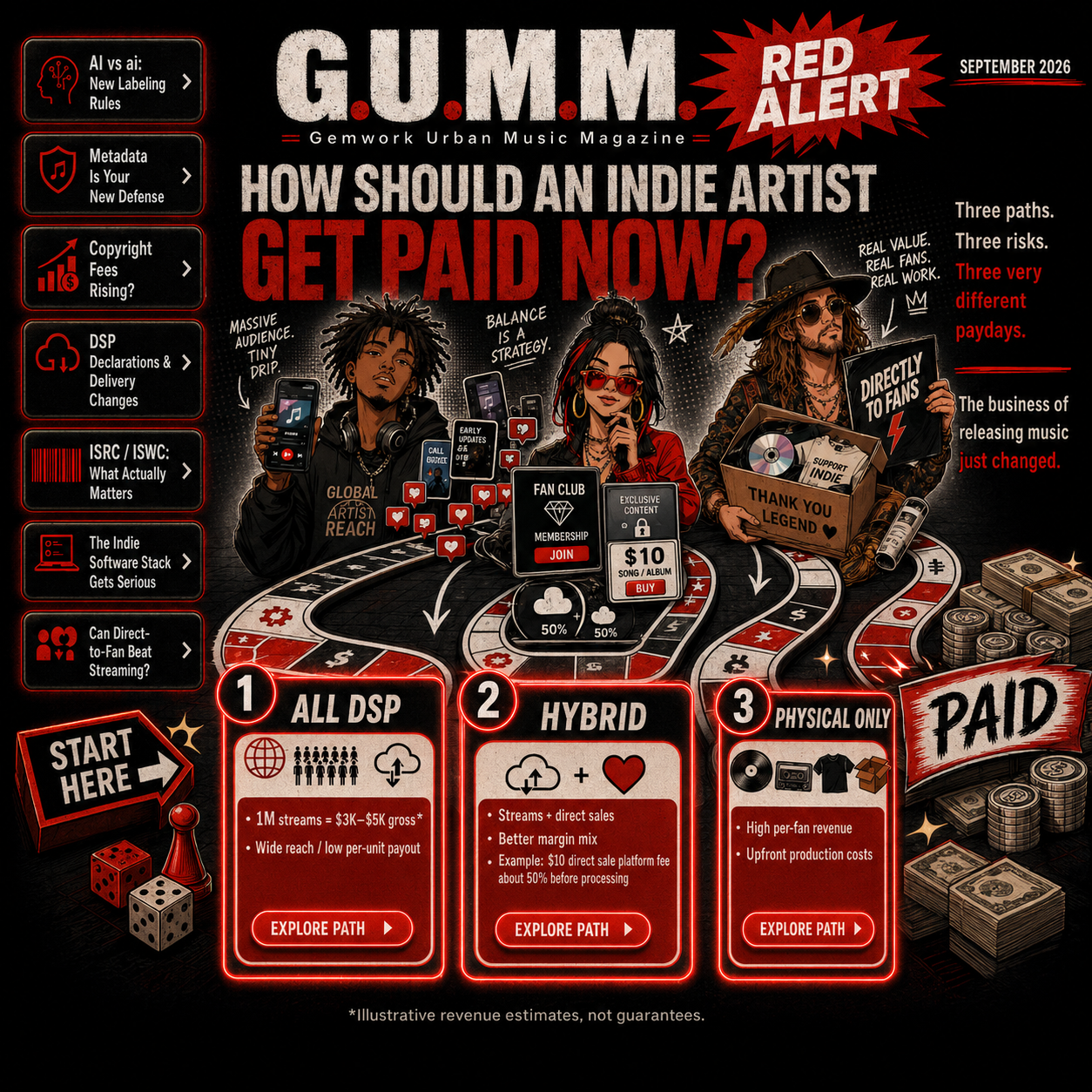
There’s a seductive piece of math floating around independent music: How much does one stream pay?
Multiply that number by your streams, stare at the result and decide whether streaming is worth it. There’s only one problem. That’s not really how the business works.
Spotify says it doesn’t pay a fixed royalty for each individual stream. Revenue flows into royalty pools and is distributed to rights holders based on streamshare; what ultimately reaches an artist also depends on their agreements with labels, distributors, publishers and other rights holders. Spotify explains its royalty system here.
So this independent artist streaming strategy starts with a different question:
What if streaming isn’t just where you get paid? What if it’s where you get found?
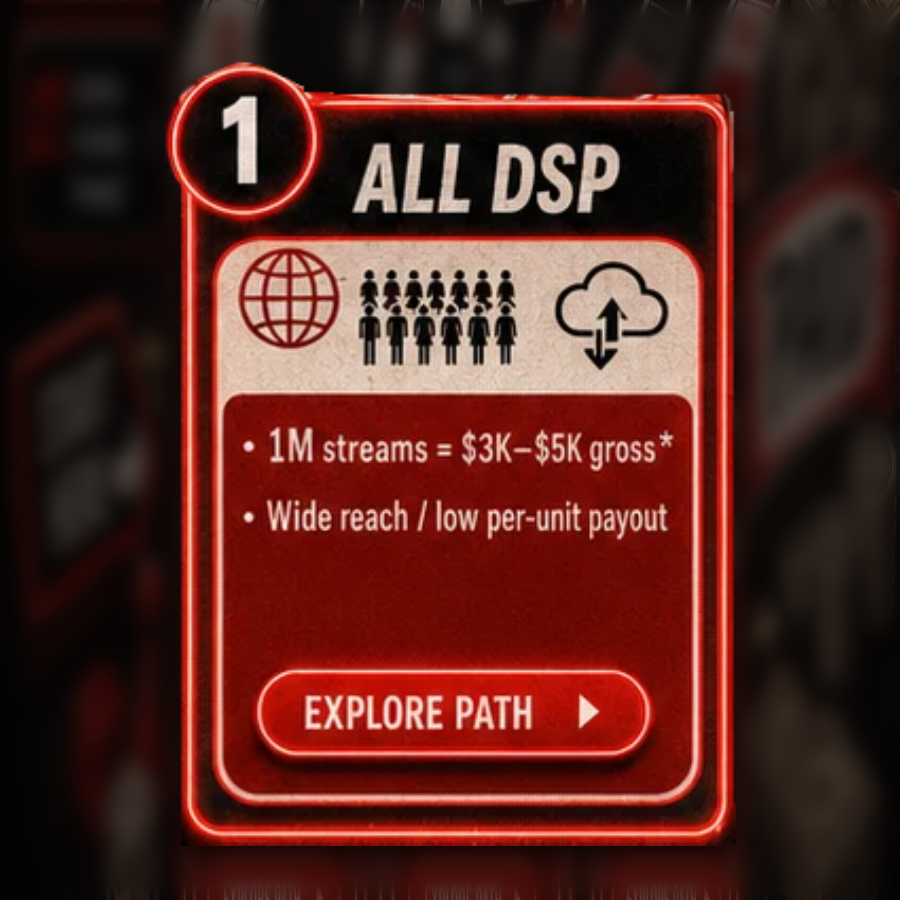
The ALL-DSP strategy
Put the record where people already listen. Spotify. Apple Music. YouTube Music. Amazon Music. TIDAL. Deezer. Regional services. Wherever your distributor legitimately delivers your catalog and your potential audience consumes music.
Don’t make the listener work. If somebody discovers you on YouTube, they shouldn’t have to change their normal listening behavior to become a fan. If they’re an Apple Music listener, be there. If Spotify is their daily habit, be there too.
The objective is frictionless discovery.
Massive audience. Tiny drip.
The individual interaction may produce relatively little direct revenue. But the potential value of the audience created by thousands of those interactions is another matter entirely.
Don’t just count streams. Look for fire.
Consider a hypothetical release that generates 25,000 streams. Cool. But where did they happen? What if 7,000 came from Southern California? What if Atlanta suddenly jumped? What if listeners in London started returning? What if a song you aren’t actively promoting begins moving through Shorts?
That’s information.
YouTube’s Analytics for Artists provides views, watch time, unique viewers, geographic information and song performance across long-form videos and Shorts. Its Total Reach includes artist or label uploads, collaborations and fan videos using the music. Access and available reports depend on the artist account and feature availability.
That’s when the conversation becomes more interesting than “How much did those streams pay?” Ask: Where are people listening? Which song brought them in? Did they come back? Did another piece of content cause the spike? Are they watching as well as listening? Is one city behaving differently from everywhere else?
Because streams can become signals.
Follow the signal.
Imagine you’re an independent artist in Riverside and your analytics suddenly show unusual activity in Atlanta. Don’t shrug and say, that’s interesting. Investigate.
Run geographically focused content. Look for Atlanta DJs and tastemakers. Research appropriate venues. Look at local creators. Test a small campaign. Find out whether the activity grows.
Now imagine that audience continues growing. Your conversation with a promoter changes. Instead of “We’re a really good group. Give us a chance,” you can walk in with evidence: “Here’s what our audience is doing in your market.”
That’s leverage. It is still a hypothesis to test: listening activity does not guarantee ticket sales. Compare repeat engagement, actual signups and previous purchases before committing to an expensive trip.
The stream is the beginning of the funnel
This is where independent artists can make a mistake. They treat the stream as the final transaction. It doesn’t have to be.
A listener discovers a song. Then watches the video. Then follows the artist. Then joins the mailing list. Then buys a ticket. Then buys a shirt. Then joins the community. Then buys the limited record. Then brings somebody else to the next show.
That relationship could look more like:
STREAM → DISCOVERY → FOLLOW → DATA → COMMUNITY → TICKET → MERCH → PHYSICAL → MEMBERSHIP → OPPORTUNITY
Suddenly that first stream wasn’t worth only whatever royalty ultimately flowed from that particular play. It was the first door. Each step needs a useful offer and a reason to take it; the arrows aren’t automatic.
Turn audience into something you own
There is still a weakness in Path 01. A Spotify follower isn’t your mailing list. A YouTube subscriber isn’t your customer database. A TikTok follower isn’t automatically somebody you can reach outside TikTok.
Platforms provide extraordinary distribution and discovery, but the platform controls the platform.
So use the reach. But give interested people somewhere else to go: your website, newsletter, fan community, DJ club, text list, membership, store or shows. Invite people to opt in; a stream itself does not grant permission to contact a listener.
The objective isn’t to drag everybody away from streaming. It’s to give your most interested listeners another level of relationship.
The real ALL-DSP play
Put the music everywhere appropriate. Remove friction. Create multiple entrances into the same record. Watch the data. Identify momentum. Then do something with it.
A streaming audience doesn’t automatically become a business. That’s your job. And that’s the distinction at the center of Path 01.
Spotify reported paying more than $11 billion to music rights holders in 2025, while emphasizing that its system is based on streamshare rather than a universal fixed per-stream payment. This is a platform-wide payout to the music industry, not a statement of artists’ take-home income. Read Spotify’s 2025 results.
There’s real money in streaming. There’s also enormous competition for it. For an independent artist, the opportunity may therefore be larger than the royalty statement alone: reach + discovery + information + leverage.
G.U.M.M. Bottom Line
Don’t judge streaming only by what one play appears to be worth. Judge your strategy by the relationships and opportunities you build with the listeners who respond.
Massive audience. Tiny drip. Get enough drips moving in the same direction—and you’ve got a current.
 Los Angeles | Redlands | Phoenix | Memphis | NYC
Follow us: @GemworkTV | Contact: info@gemwork.tv
Los Angeles | Redlands | Phoenix | Memphis | NYC
Follow us: @GemworkTV | Contact: info@gemwork.tv